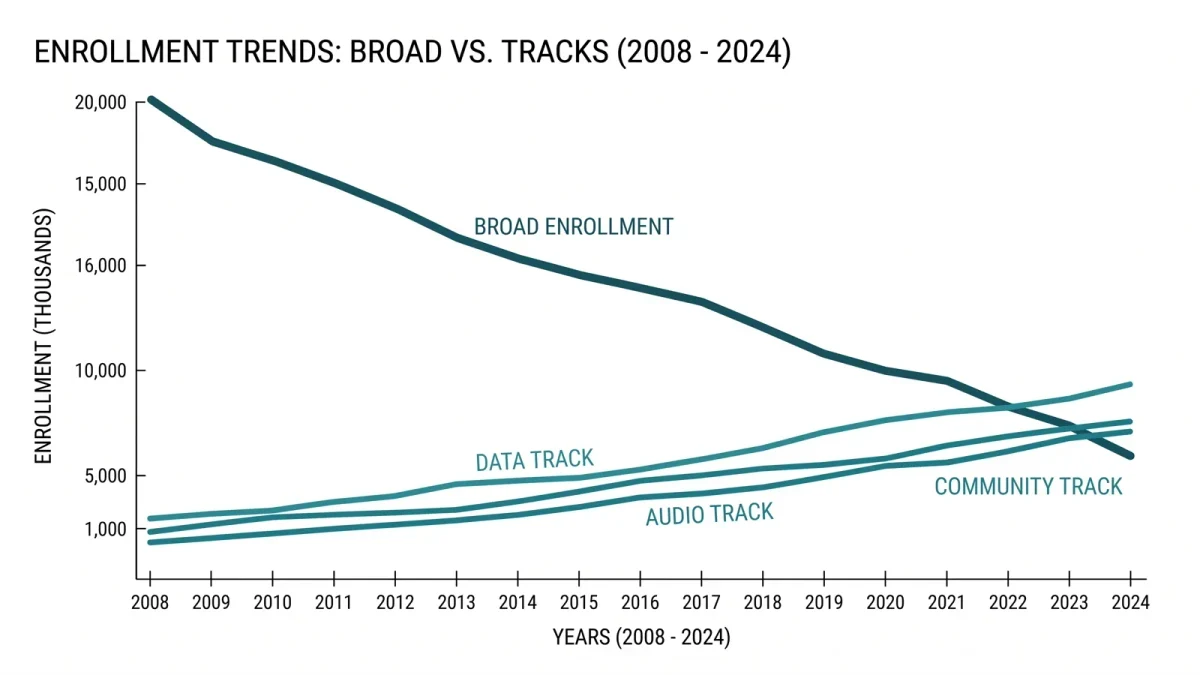
Dual enrollment is growing because it now has the numbers to prove what families always hoped: nearly 2.5 million U.S. high school students took at least one college course in 2022-23, roughly one-third of all eleventh and twelfth graders in public high schools, per the first-ever national count collected through the federal IPEDS system. About 73 percent of those students — nearly 1.8 million — took their courses at community colleges. Growth is driven by state investment, college enrollment pressure, and families chasing tuition savings, which makes understanding how a local program works a practical money question, not just an academic one.
Juvenile Pre & Post publishes information, not advice; dual enrollment rules differ by state, district, and college.
What is dual enrollment, exactly?
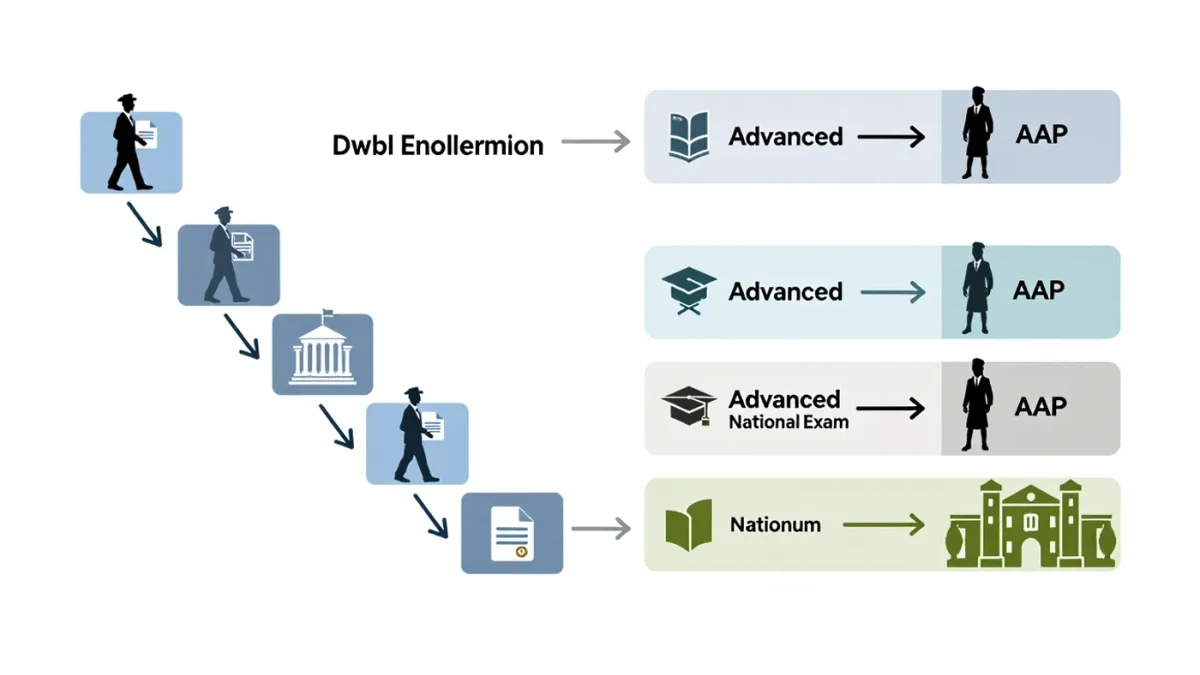
It is any arrangement where a high school student earns college credit for a course taken while still in high school. The family of terms confuses people, so the distinctions matter. Dual enrollment means the student is enrolled in both institutions and usually earns high school and college credit for one course. Concurrent enrollment is a version where a college certifies a high school teacher to teach the college course inside the high school. Advanced Placement, by contrast, is a high school course with a standardized exam — whether credit counts is decided later by whatever college the student attends, not guaranteed up front the way dual enrollment credit is.
Why is it expanding so fast?
Three forces pushed in the same direction. States fund it deliberately: most states now have policies or funding that let high school students take community college courses free or nearly free, which turns dual enrollment into a tuition discount families can bank. Colleges need the enrollment: with traditional college-age enrollment shrinking, dual enrollment students are one of the few reliably growing student populations, and community colleges in particular court the partnerships. And the credit-transfer logic favors it: per the Institute of Education Sciences, dual enrollment is associated with higher rates of high school completion, college enrollment, and college completion — with the caveat that students who choose it already tend to be stronger students, so the research compares carefully.
Who is actually getting access?
Here is the finding families should sit with: the first national IPEDS collection, analyzed by the Community College Research Center at Columbia University, revealed wide gaps in who participates. Participation is substantially higher in small-town and rural districts than in cities, and white students participate at higher rates than Black and Hispanic students nationally — a pattern driven less by student choice than by where programs physically exist and who hears about them. Some states have pushed access deliberately, expanding concurrent offerings inside high schools so students do not need transportation to a campus. Whether a local program is open to all students or by invitation is a question worth asking directly.
Does the credit really transfer?
Usually within state, less reliably across states. Public community colleges and public four-year universities inside the same state typically honor each other's credit through transfer agreements, and many states guarantee that a defined set of dual enrollment credits applies to general education requirements. The friction points: private and out-of-state colleges evaluate credit case by case, remedial or developmental courses often do not transfer anywhere, and credit tied to a specific vocational credential may not count toward an academic degree. Before a student commits, the family should ask the receiving question early: if the goal is a specific four-year campus, check that campus's transfer policy for dual enrollment credit in writing.
What are the risks worth weighing?
Dual enrollment has real costs beyond the benefits. Grades are permanent: a college transcript starts the moment the first course does, and a weak grade follows the student to every later application. Readiness varies: a fourteen- or fifteen-year-old in a college classroom with adults is an academic and social stretch that suits some students and not others. And college-application mechanics shift — applying as a first-year student with two years of college credit can affect financial aid packaging and transfer status, which is worth a conversation with a school counselor before senior year, not after.
How should a family start?
A short sequence works better than enthusiasm. Ask the high school counselor which college partners with the district and what the district pays. Confirm the student places into college-level work — placement usually rests on GPA or a placement test rather than the SAT. Start with one course in a subject the student is genuinely strong in, rather than a full schedule. And get the transfer answer in writing for the most likely destination campuses. Done carefully, per the 2022-23 national data, dual enrollment is one of the few expansions in education that families can convert directly into semesters of tuition saved.
Who pays for dual enrollment?
The payment models vary more than the marketing suggests, and the family's bill depends on which one governs locally. In the most generous states, the state subsidizes tuition for high school students directly, and the district or state covers textbooks; in others, the student's family pays tuition up front and seeks reimbursement; in the least generous, families carry the full cost of each college course. Fees are a separate question from tuition — a course can be tuition-free and still carry registration or materials fees. Before enrolling, ask the dual enrollment coordinator two questions in writing: what does the family owe per course, and what happens to the bill if the student withdraws after the drop deadline. The answers differ district to district and are the difference between a bargain and a surprise.
Dual enrollment or AP — which counts more?
They solve different problems, and the honest comparison is about certainty versus prestige.
| Feature | Dual enrollment | Advanced Placement |
|---|---|---|
| Credit decided by | College at enrollment; credit posted on a college transcript | Receiving college, after reviewing the exam score |
| Certainty | High — credit exists once the course is passed | Variable — same score earns credit at one campus, nothing at another |
| Where it happens | College campus, or in the high school via concurrent sections | In the high school, ending in a standardized exam |
| Best fit | Students targeting in-state public universities with transfer agreements | Students targeting selective campuses that publish generous AP credit policies |
The general pattern families can rely on: dual enrollment credit is more certain, AP credit is more portable in reputation. A student aiming at a specific flagship campus should simply look up that campus's published policy for both — every university posts an AP credit table and a transfer credit policy, and ten minutes of reading settles the question for their actual case.