Students can stay informed in about ten minutes a day. The trick is not reading more news — it's reading news on a schedule. A short, planned check-in beats hours of aimless scrolling, and it leaves time for everything else a school day demands.
The habit matters because the alternative tends to choose itself. Open a phone "for a second" and the feed decides what happens next. A defined routine flips that: the student picks a time, a source, and a stopping point, then gets on with the day.
It helps to be clear about who this is for. A student, in the broad sense, is anyone enrolled in a school or other educational institution — or, as Wikipedia puts it, a person who takes a special interest in a subject. That second half is the point here: staying informed is a skill anyone can practice, at any age, and it doesn't require an endless feed to do it.
What is doomscrolling, and why does it pull students in?
Doomscrolling is compulsively scrolling through negative news even when it makes you feel worse. The feeds are built to keep going. There's no natural end point, so a two-minute check stretches into twenty.
The pull is stronger for students because school stress is already high. Scrolling feels like a break, but it usually isn't. Time disappears, focus splits, and the mood often drops. Families watching this pattern at home aren't imagining it — it's one reason more districts are rethinking phone policies during the school day.
What this means for parents: the goal isn't to ban news. It's to replace the infinite scroll with a finite habit.
How do you build a ten-minute news routine?
Start with a fixed time. Morning before school, right after dinner, or on the commute all work. The specific slot matters less than having one, because a scheduled check-in removes the constant "should I look now?" decision.
Then follow the same three steps each time:
- Pick one or two sources in advance. Choose them when you're calm, not mid-scroll. A newspaper app, a public radio briefing, or a school-run digest all work.
- Set a timer for ten minutes. When it rings, you're done. No exceptions, no "one more story."
- Pick one story to actually read. Skim headlines, choose the one that matters most to you, and read it properly. Depth beats volume.
That's the whole routine. It fits inside a study break, and it's over before it turns into a spiral.
What should a student actually read each day?
A good daily mix has three parts: one big national or world story, one local or school story, and one thing you're genuinely curious about. That last slot matters. Curiosity is what turns news-reading from a chore into an interest, and it's how a student figures out which topics they care about long-term.
Quality of source matters more than quantity. Teach students to notice who published a story and why. If a headline seems designed to provoke a reaction before it informs, that's a signal to check the sourcing — a habit worth building early, as we covered in Teaching Kids to Fact-Check What They Share.
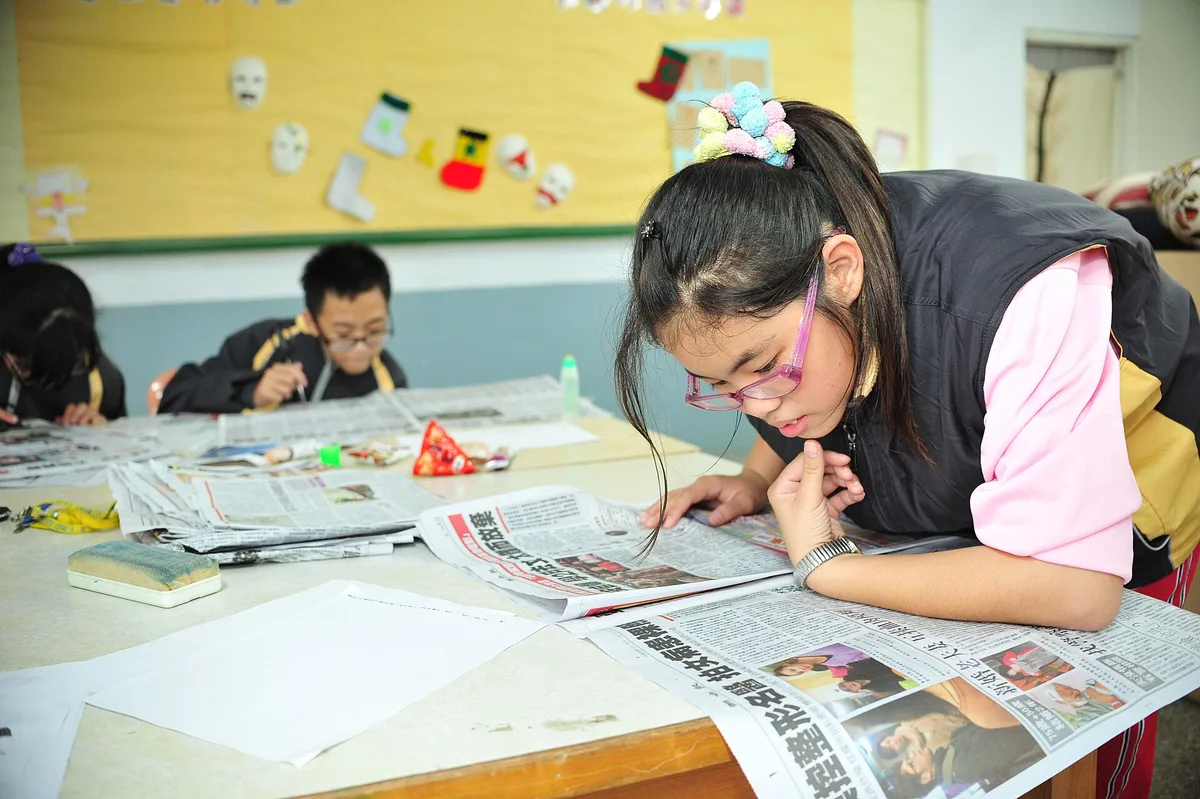
For students who want to go deeper, producing news beats only consuming it. Running a paper or a broadcast forces you to weigh what's worth reporting, which is exactly the judgment a good reader needs too. Our guides on starting a student newspaper from scratch and what happens behind the scenes of a student news broadcast show what that looks like in practice.
How does this connect to study habits and wellbeing?
A time-boxed news check is really a study-skills move in disguise. It practices the same core abilities: starting on schedule, working within a limit, and stopping when the timer says so. Students who struggle with focus often find the news routine easier to keep than homework, which makes it a good place to practice. If the bigger habit needs work, our guide on helping a middle schooler rebuild study habits covers the same structure in more depth.
The wellbeing angle is just as real. Constant exposure to upsetting headlines is a known strain, and schools are paying attention — our reporting on student mental health services shows how much demand schools are seeing. A bounded news habit is one small, practical way families can lower that load without cutting a student off from the world.
Parents can help without lecturing. Try doing the ten-minute check alongside your student, then talking about one story each. It models the habit, keeps the conversation light, and gives you a natural window into what your teen is thinking about.
What if the routine slips?
It will slip. Tests, games, late nights — the routine will lose days. That's fine, and it's not a failure. The fix is the same as with any habit: return to the timer the next day without turning it into a big conversation.
Two adjustments help. First, if ten minutes keeps turning into thirty, shrink the routine to five minutes and one story. A small routine you keep beats a big one you don't. Second, if a particular week is genuinely heavy — an election, a crisis, a big exam season — it's okay to take a deliberate break from the news entirely. Choosing to step away for a set period is different from drifting, and it's a skill worth naming for students.
Our analysis: the students who stay informed long-term aren't the ones who read the most. They're the ones who built a routine small enough to survive a busy semester.
Where families can take this next
The evidence here points to a simple conclusion: a short, scheduled, source-checked news habit gives students the information they need and protects the time and attention they need even more. Start this week. Pick the time, pick the sources, set the timer, and let the routine do the rest. Staying informed shouldn't cost a whole evening — and with a plan, it doesn't have to.