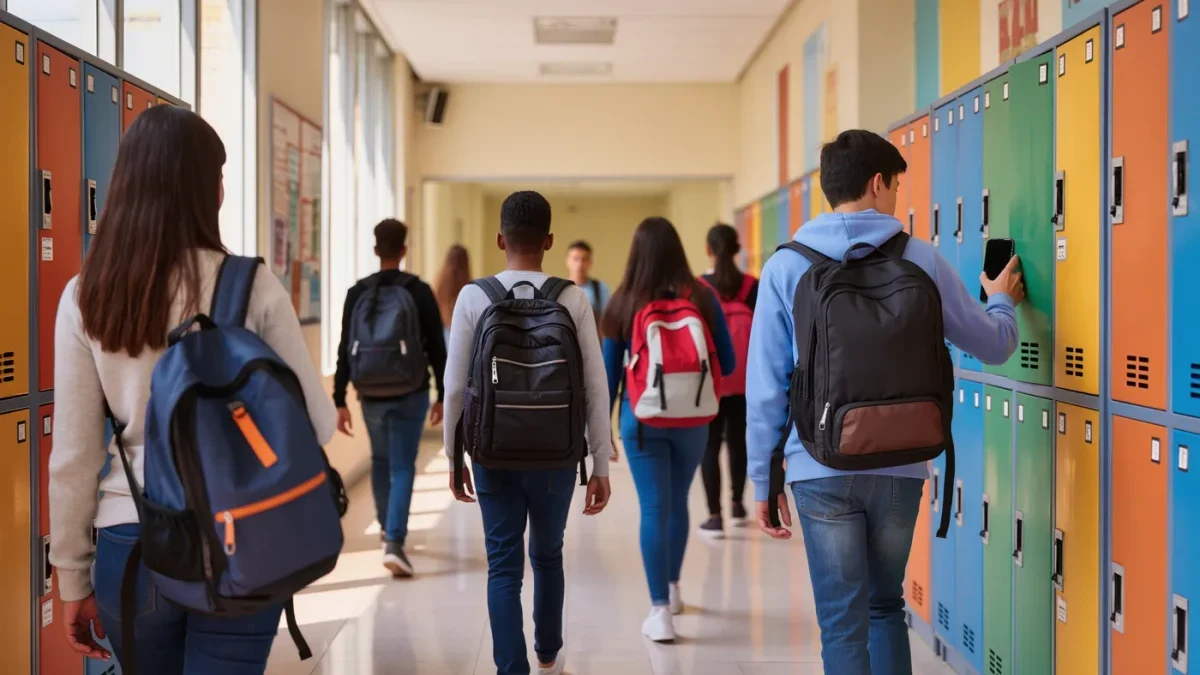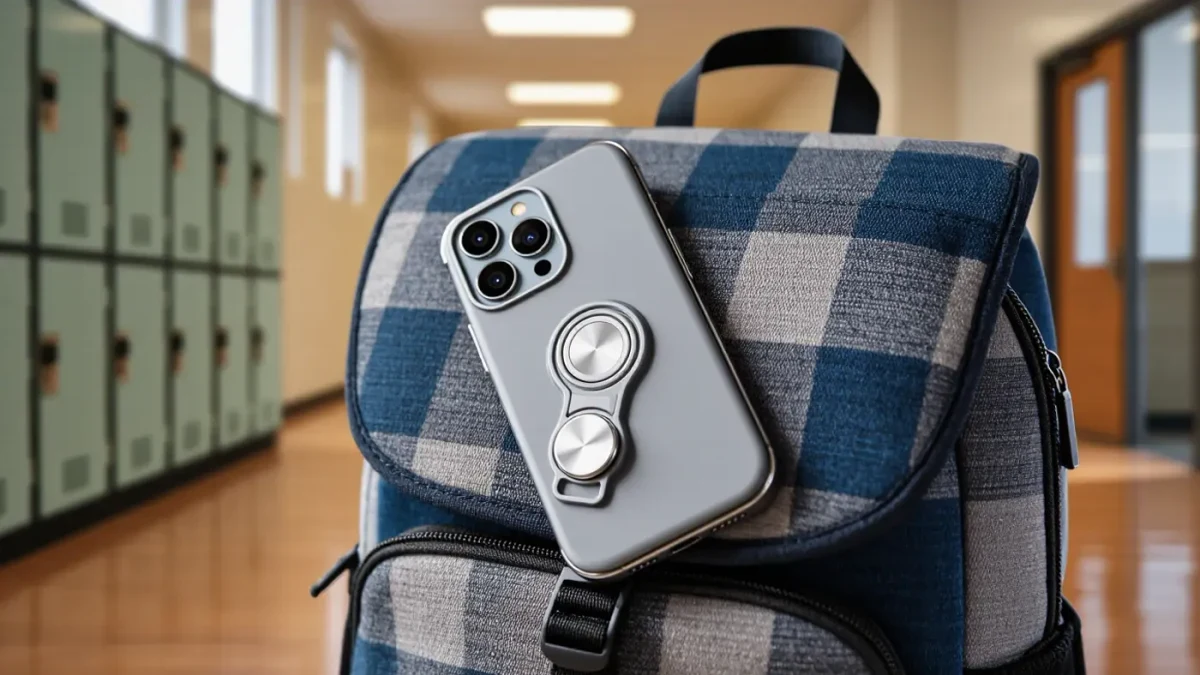
Districts are rethinking phone policies because state legislatures did it for them: since Florida passed the first statewide restriction in 2023, laws limiting student phone use have spread to at least 39 states plus the District of Columbia, per Education Week's tracking, and 22 states plus D.C. now mandate full bell-to-bell bans, per the Harvard Kennedy School. The 2025 legislative sessions added more than 20 new state laws, per the Education Commission of the States, shifting the debate from whether to restrict phones to how strictly, and who enforces it.
Juvenile Pre & Post publishes information, not advice; phone rules differ by state, district, and school.
What changed after Florida's 2023 law?
Florida's House Bill 379, enacted in 2023, prohibited phone use during instructional time — a classroom-only standard. What followed was stricter, not looser. Louisiana required phones off and away from arrival to dismissal starting in 2024. California's Phone-Free School Act, signed in September 2024, requires every district to adopt a policy limiting smartphone use by July 1, 2026, with bell-to-bell rules during school hours as the default. Virginia turned a 2024 executive order into permanent law in 2025, and several states extended bans to lunch, recess, and passing periods rather than class time alone.
Why are states choosing bell-to-bell?
Enforcement is the honest answer. Instructional-time bans put the burden on each teacher to police pockets and hall passes, and the rules dissolved at the bell — exactly when most student conflicts and social-media incidents happen. Research summarized by the Institute of Education Sciences in January 2025 found evidence that phone restrictions can improve focus and reduce disruption, though effects on achievement are not yet settled. Bell-to-bell rules move enforcement to the school level, typically with locked pouches or front-office collection, and shrink the gray zones teachers complained about most.
What is the pushback?
Parents who want direct contact during the day — especially in a school emergency — are the loudest constituency against full bans, and some states have written exceptions into law. Virginia's 2025 law explicitly bars suspension or expulsion for a phone violation and keeps school resource officers out of enforcement. Districts commonly allow smartwatches, health devices, and individualized plans for students who need a phone for a documented medical reason.
What should families do?
Two practical steps. Learn the actual policy — the district handbook now governs, and state laws set floors, not uniform rules. And set the emergency plan before the first day: schools almost always relay urgent messages through the front office, and a student who knows the plan handles a locked-away phone better than one who doesn't. The direction of travel is clear either way; the number of states leaving phone policy entirely to local districts keeps shrinking every session.