Math tests are best studied for by redoing problems from scratch, spread across several short sessions — not by rereading notes or grinding one long night. A 2006 meta-analysis of distributed-practice research published in Psychological Bulletin, analyzing more than a hundred studies, found spacing practice out over time reliably beats massing it, and the 2022 NAEP mathematics results — down five points in fourth grade and eight in eighth since 2019 — show how many students could use the better method.
Math differs from every other subject in one way that changes everything about studying: it is a performance, not a body of facts. You cannot watch someone swim and then swim. Here is how that principle turns into a concrete week.
Why Does Cramming Fail So Badly in Math?
Cramming moves knowledge into short-term memory, and math tests do not test short-term memory. A test question is a new problem wearing an unfamiliar costume; solving it requires retrieving a procedure and adapting it, which is a skill built through repeated retrieval under mild variation. The night-before marathon gives students neither the repetition nor the time between repetitions that the brain needs to consolidate a skill.
There is a second, quieter failure. Cramming pairs the material with panic, and for students already uneasy about math, that pairing hardens into avoidance — the textbook stays in the bag, and the gap compounds. Spaced short sessions keep the emotional temperature low, which is half their power.
What Does a Spaced Study Week Look Like?
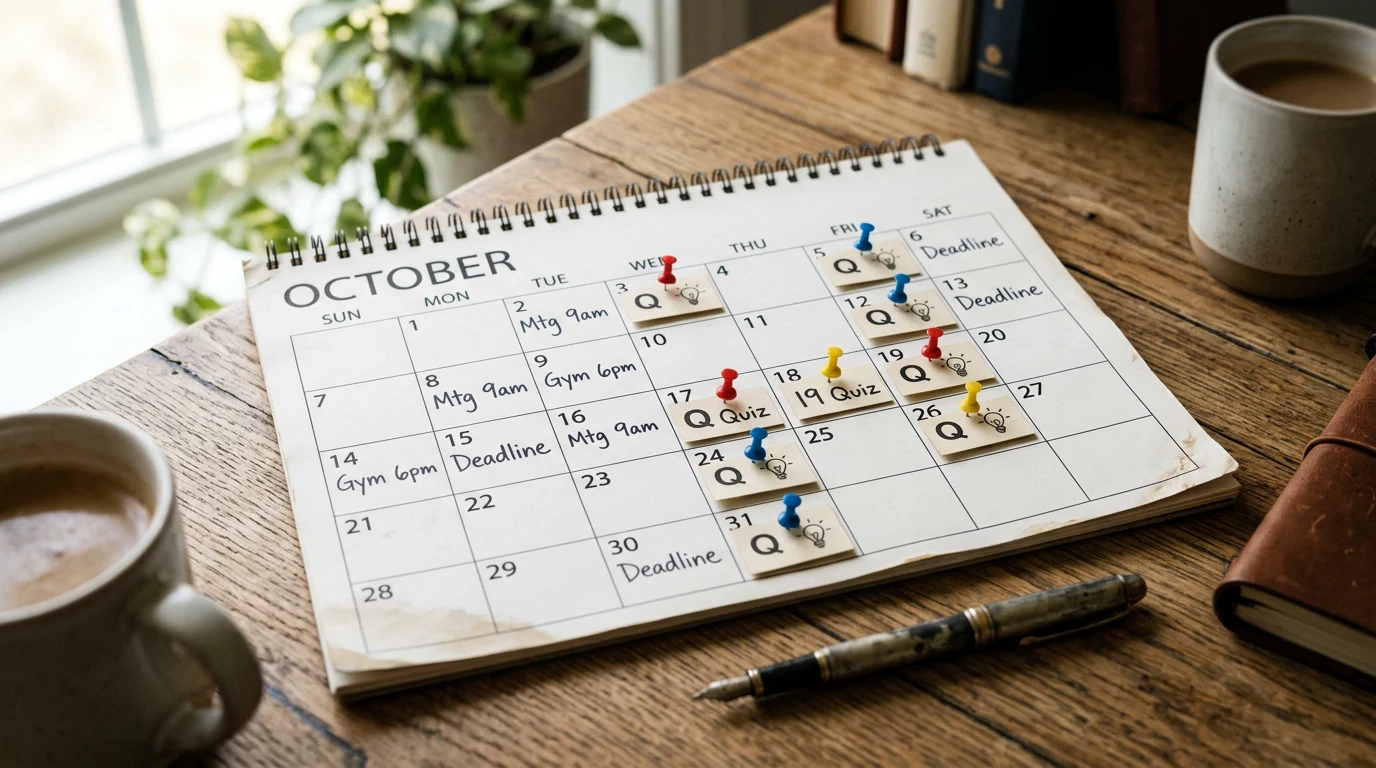
Start five or six days out — the whole plan needs about thirty minutes a day, less than one panicked evening.
- Days 1–2: rebuild the map. List every topic on the test from the study guide or the last month of notes. For each, the student rates it green, yellow, or red. Most of the week's time goes to red and yellow; green gets one touch at the end. This fifteen-minute self-audit is the step crammers skip.
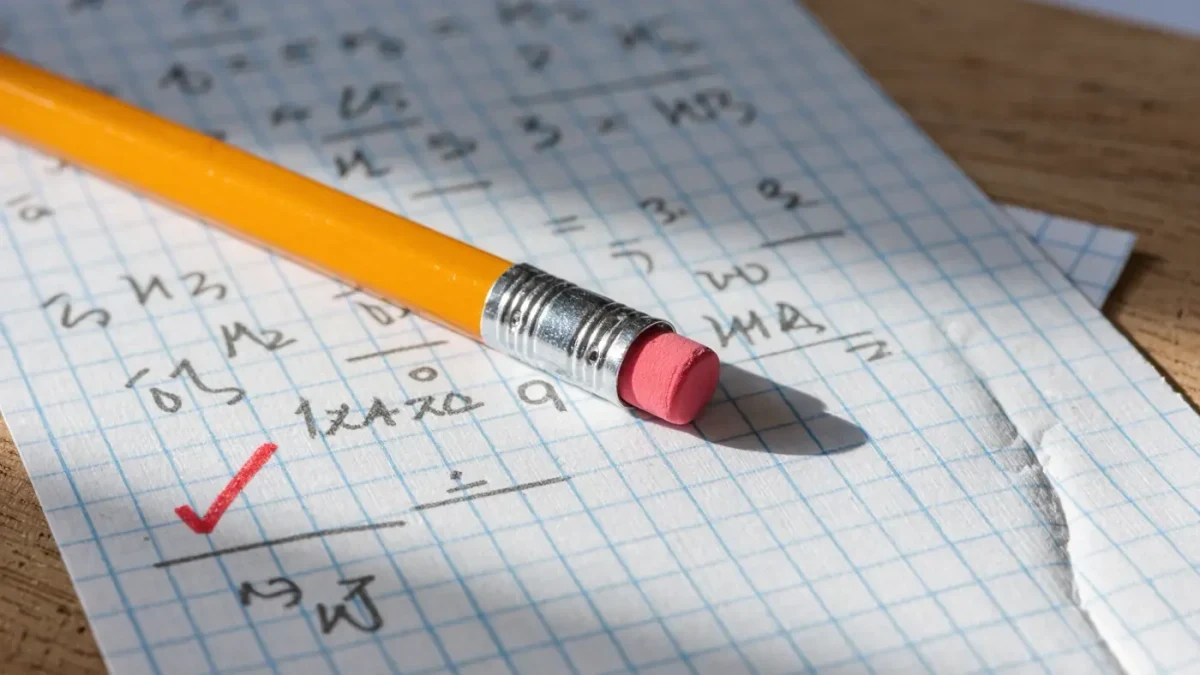
- Days 2–4: redo problems, cold. Take old homework and quiz problems, cover the old solution entirely, and redo them from a blank page. Checking the finished work against the old solution — not peeking mid-problem — is what makes this retrieval practice instead of copying. Five to eight problems a day is plenty.
- Day 5: mix the topics. Do one problem from each topic in shuffled order. Math tests mix everything at once, and studying mixed — psychologists call it interleaving — trains students to choose the right tool, which is the actual test skill.
- Day 6, eve of the test: light and confident. Redo two problems that are now comfortable, re-read the map, assemble materials, sleep. New material learned after dinner the night before displaces sleep and displaces very little else.
Why Is Redoing Old Problems Better Than New Ones?
Both belong in the week, but old problems come first, for two reasons. First, tests overwhelmingly resemble the problems a class has already done; the redos are rehearsals of the exact performances required. Second, a redone problem gives clean feedback — the student either reproduces the path or discovers exactly where it broke, which tells them what to bring to the teacher the next morning.
The single most-used help line in math studying is also the most honest: when stuck for more than a few minutes, mark the problem, write the specific question — "why does the sign flip here?" — and ask the teacher or a tutor the next day. A stack of specific questions is worth more than an hour of silent flailing, and teachers consistently reward students who arrive with them.
Mistakes belong in the plan, not outside it. A dedicated error log — one page where each missed practice problem is copied with a note about the actual cause, whether a sign error, a misread question, or a genuinely unknown step — turns wrong answers into the study guide. By day five, that page is the most personalized test-prep document a student can own, and reviewing it takes ten minutes.
How Do You Study for Word Problems and Multi-Step Tasks?
Word problems fail at translation, not arithmetic, so they should be studied at the translation step. For each practice problem, the student writes, before any math: what is being asked, what each quantity is, and which relationship connects them. Doing this on five problems builds the habit better than doing all the math on fifty.
A fast secondary drill helps too: take worked examples from the textbook and, covering the solution, narrate aloud the steps and the reason for each. Explaining why each step happens — the reason, not the recitation — is the strongest evidence of understanding a student can produce, and hearing themselves do it builds exactly the self-checking a test requires.
What About Math Anxiety?
For students whose math trouble shows up as dread, the study plan matters less than the stakes. Timed practice helps — a calm run-through of ten problems with a clock running drains some of the test-day novelty. So does a written brain dump: two minutes at the test's start copying formulas and steps onto the margin, which offloads the fear of forgetting and frees working memory for the problems.
Parents should watch their own framing here. "I was never a math person" licenses quitting, and hovering over nightly worksheets pairs math with conflict. The calmer sentence is the true one: math is a skill built by reps, nobody is born knowing it, and the plan above is just a sensible rep schedule.
How Can Parents Help Without Relearning Algebra?
Parents do not need the content to run the structure: protect the spaced calendar, ask to see the green-yellow-red map, and be the audience for a two-minute explanation of one problem — where the parent's only job is to look confused at the right moments. If the red column never shrinks as the test approaches, that is the signal to email the teacher, weeks into the process rather than the night after it.
The habit built here outlasts any single test. Spacing, retrieval, and mixing are the same moves that carry students through college math, certification exams, and every technical thing they will ever learn on the job. A student who owns them at fourteen owns the method; the classes just change names.