A planner works when it is reviewed daily, not just written in. The pattern behind almost every abandoned planner is the same: two enthusiastic weeks of copying assignments, then a missed day, then guilt, then a drawer. University learning centers that teach these systems — the University of North Carolina at Chapel Hill's Learning Center among them, with its free downloadable planners and time-management guides — frame the tool the same way: a planner is a daily two-minute appointment with yourself, and the appointment is the habit, not the writing.
For students, the planner is also training wheels for executive function — the brain's planning-and-remembering machinery, which research on adolescent brain development shows is still maturing well into a student's twenties. Here is how to pick a planner, use it, and get back on after the inevitable fall-off.
Why Do Planners Get Abandoned — Really?
Three design flaws kill most planner use, and none of them is laziness. First, the planner is treated as a record of homework rather than a plan of the week, so it competes with the assignment board the school already provides. Second, the daily review has no anchor — a planner checked "when there's time" is checked never. Third, the format is too big: a page of empty boxes each day quietly demands more administration than a tired student will pay.
The repair addresses each flaw directly: the planner's job is decisions (what, when, and how long), the review is attached to an existing daily habit, and the page stays small enough to complete in ninety seconds.
Paper or App — Which Works Better for Students?
For most middle and high school students, paper wins, for a reason researchers would recognize: writing by hand is slower and more effortful, and that effort is what makes the commitment stick. An app hides in a device full of faster dopamine; a paper planner lies open on the desk, physically visible, with no notifications competing and no battery to die mid-semester.
Apps earn their place for two kinds of user: students who genuinely enjoy fiddling with systems and will therefore maintain one, and students with heavy recurring schedules — practice, work shifts, tutoring — where auto-repeat beats rewriting. The honest test is November, not September: whichever format got opened every day that month is the right format.
What Should a Student Actually Write in It?
The page needs three zones, and only three.
- The task line. Each assignment or obligation gets one line with a due date — written the day it is assigned, in class, before the backpack closes. This single move is the entire memory system; everything else is planning.
- When-it-will-happen. Each evening, tasks for tomorrow get a rough time slot or at least an order. This is where the planner stops being a list and becomes a plan, and it is the step most students skip.
- A done mark. Crossing off is not decoration; the small reward is what keeps the loop alive week after week.
One rule protects the system: tasks may live only in the planner, never in memory, never on a sticky note, never in a text to self. A planner holding some tasks while its owner's head holds the rest fails within a month, because trust in the page is the whole product.
What Is the Daily Review Habit?
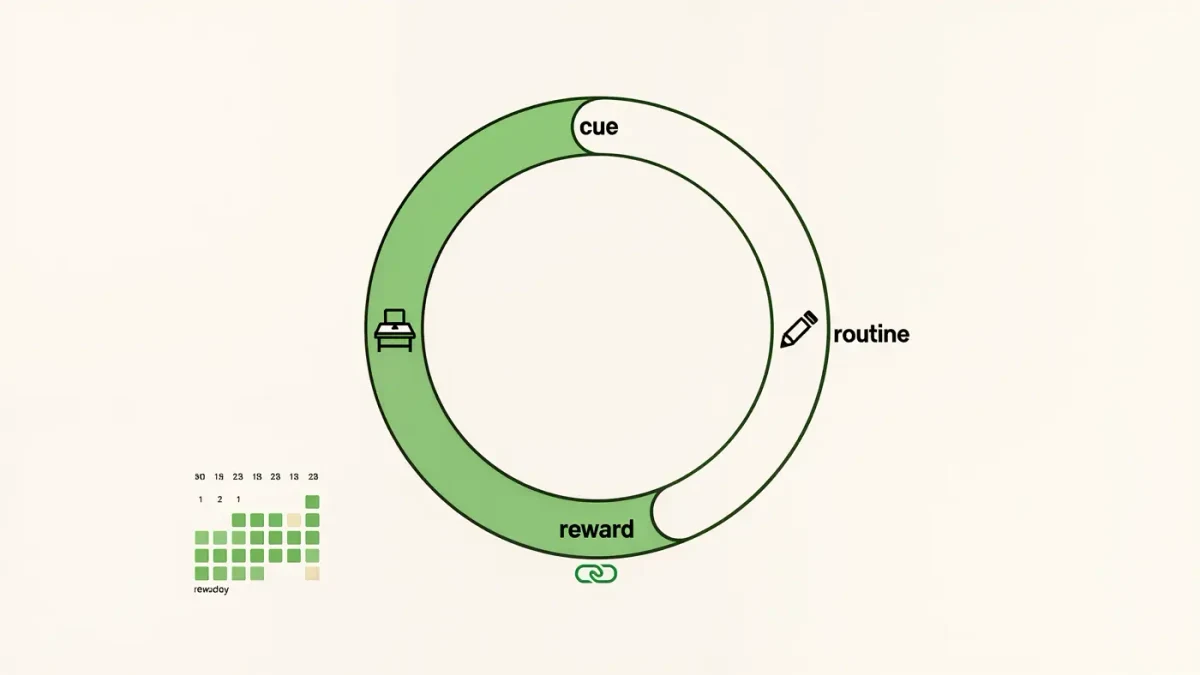
Attach the review to something that already happens every school day — the start of the homework session, or the packing of the bag at night. The review is three moves and takes about two minutes: check today and tomorrow, move anything undone to a real new date, and glance at the coming week for big items that need a start scheduled now. Families that do this at dinner — two minutes, everyone including the parents, planners or calendars open — remove the last obstacle, which is feeling supervised rather than equipped.
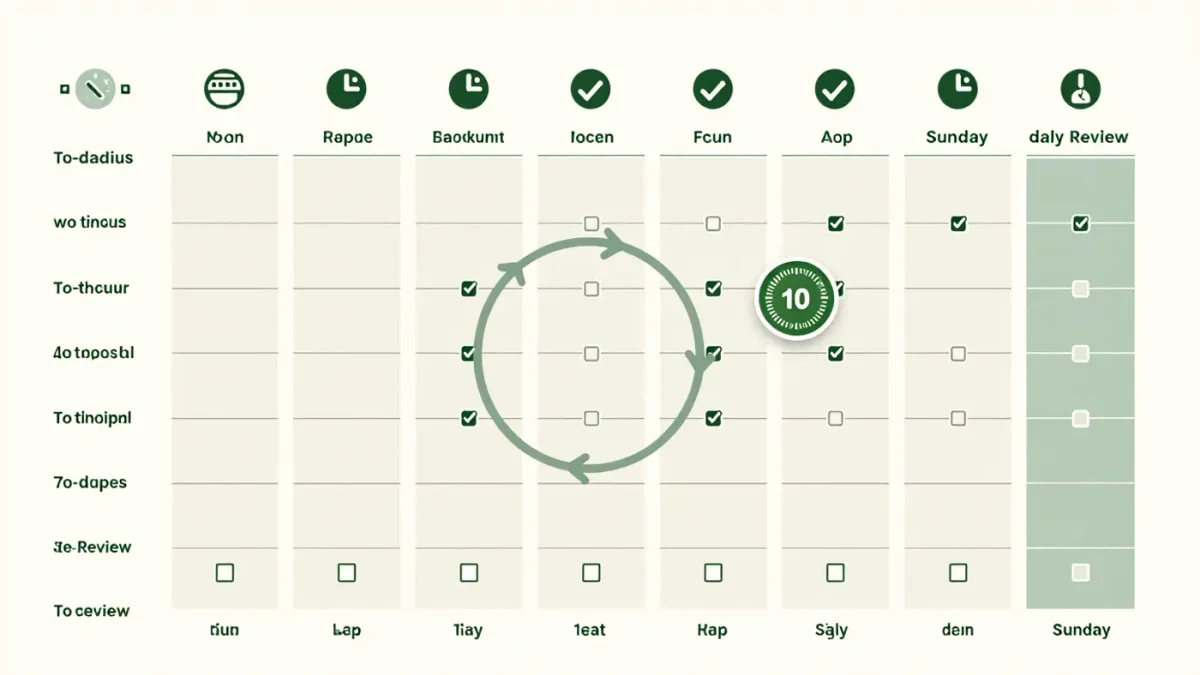
The weekly version matters just as much: ten minutes on Sunday to look at the whole week ahead — tests, practices, shifts, the boring errands — and mark the two or three fixed points each day will be built around. Students who plan Sundays report the week feels longer, which is to say it stops leaking.
How Do You Recover After Missing Days?
You reopen the book and write today's date. Not a rewrite of the lost week, not a fresh planner, not a lecture — the comeback cost must stay under one minute or the planner will be quit for good. The skill being trained is the return, not the streak; adults who run calendars for a living miss days too, and the competent ones simply resume.
Parents should resist auditing. A planner inspected nightly becomes the parent's document, and adolescents are wonderfully efficient at neglecting what is not theirs. The better parental moves are the ones that model: keeping their own calendar visibly, asking "what's the plan for tomorrow" instead of "did you write it down," and letting a missed assignment teach its lesson once while the recovery habit does its quiet work.
A color system is optional and can wait. Students often buy four pens and invent a code in September, then abandon the whole book when the red pen is lost. The starter system is one pen and one page; if after a month the student wants color for tests versus homework versus life, they will invent it themselves, and self-invented rules are the only ones that survive contact with a backpack.
What Makes a Planner Good to Buy?
Small, undated, and boring. Undated pages mean missed days waste no paper — dated planners die of guilt by design. A weekly spread with room for seven short daily lists covers a student's whole life; hourly grids invite over-scheduling. One ribbon or elastic to mark the current week, a size that fits the backpack's front pocket, and no built-in inspirational quotes, which a twelve-year-old will read once and mock forever.
Start it at a natural moment — the new school year, the first week of a semester, the Monday after this article. Two minutes a day, one page per week, Sunday's ten minutes, and a return habit that costs nothing. That is the entire system, and it is the one that is still running in March.