Career and technical education is expanding in American high schools to a scale most families underestimate: federal transcript studies show roughly three in four high school students earn at least one CTE credit, and the federal program that funds it — reauthorized as Perkins V in 2018 with annual funding above one billion dollars — now emphasizes whole programs of study that run from high school into college credit and industry credentials. The modern version is health sciences, information technology, engineering, and skilled trades taught alongside academics, not instead of them. For a teenager deciding what junior year is for, that change is worth understanding.
As always with school choice, this is information about the current field, not advice about your child. Programs differ enormously by district, and the right question is always what a specific program leads to.
Isn't CTE just the old vocational track?
The ancestry is real; the tracking is not supposed to be. The vocational education of the mid-twentieth century sorted students — often by class and race — into terminal programs with no college path. The sector was rebuilt deliberately: the 2006 law renamed it career and technical education and required access for all students, and the 2018 reauthorization tied funding to programs that include both academic coursework and a clear route to postsecondary education. Modern CTE sequences are built as programs of study — a high school concentration that aligns with college coursework, an industry certification, or an apprenticeship. The stigma has been slower to die than the structure, but employers' demand for credentialed skills has done a lot of the persuading.
What do students actually take?
The federal data groups CTE into clusters. The largest by far is health science — driven by hiring demand and by the fact that nursing pathways can begin with high school coursework and a certification. Information technology, business, engineering and technology, agriculture, and the skilled trades round out the top clusters. A student who "concentrates" — completes at least two courses in one cluster — graduates high school at rates above the national average, per federal reporting on CTE participants, a correlation researchers partly attribute to the programs giving coursework a visible destination.
What is driving the expansion?
Three pressures converged. Labor markets tightened: industries from construction to advanced manufacturing publicized shortages of credentialed workers, and states responded by funding equipment and instructors. College costs rose: families and policymakers became more interested in paths where a student graduates with an industry certification, dual enrollment credit, or an apprenticeship offer — credentials with market value at eighteen. And states legislated: many passed policies in the early 2020s expanding career pathways, work-based learning, and funding weights for CTE students, building on the 2018 federal law's bigger state role in program design.
What is dual enrollment doing inside CTE?
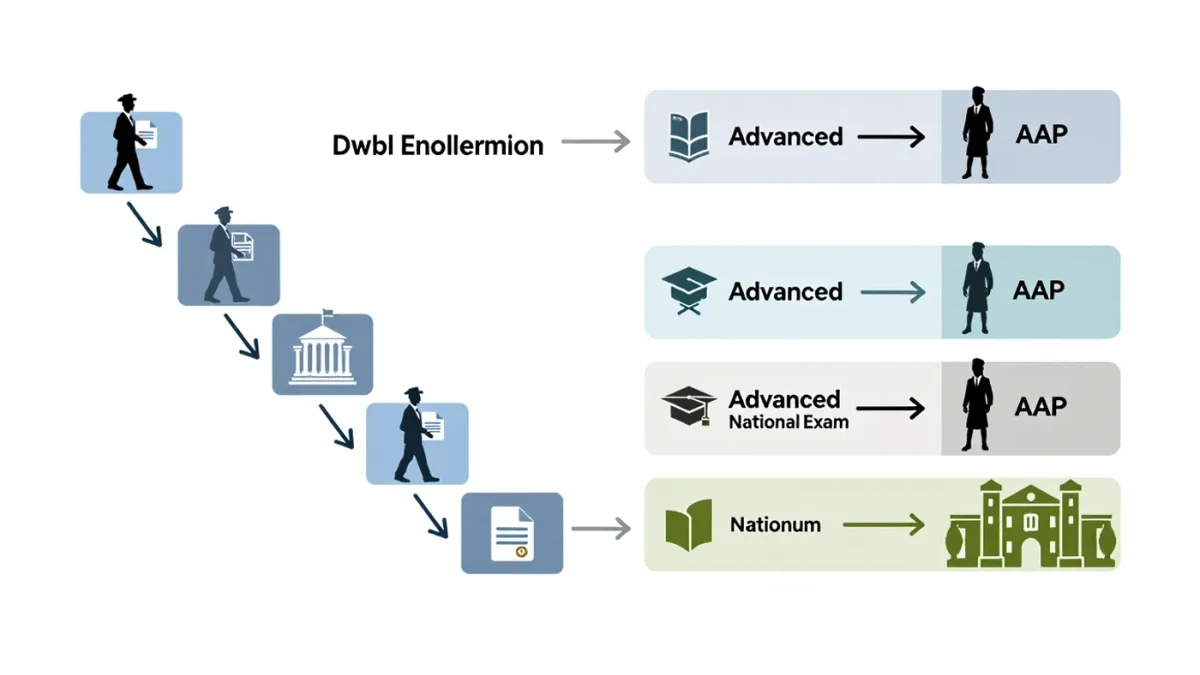
It is the quiet engine of the expansion. Many CTE courses now carry community college credit through dual enrollment arrangements, so a high school junior in a health sciences program can also bank college credits toward a nursing degree — an application of the broader growth in dual enrollment programs, which has been among the fastest-moving areas in all of secondary education. The practical payoff for families: the cheapest college credits a student will ever earn are the ones earned in a high school lab with no tuition attached, and CTE is where those credits come with a credential alongside.
What should a family check before enrolling?
Five questions separate a strong program from a course catalog.
- What credential does it end with? A program should name the certification, license exam, or college credits a completer walks away with.
- Who employs its graduates? Strong programs have advisory committees of local employers and can say where recent completers landed.
- Is there work-based learning? Internships, job shadows, or a clinical placement — the component most tied to post-graduation outcomes.
- Does the path continue? The best programs articulate into specific college majors or apprenticeships, with the credit transfer spelled out.
- Who teaches it? CTE instructors with recent industry experience are the difference between a simulation and a connection.
What does the research say about CTE outcomes?
The evidence is stronger than most parents assume, with the usual caveat that it mostly studies students who chose CTE, so selection is part of every number. With that caution: federal performance reporting has consistently shown CTE concentrators graduating high school above the national average, and peer-reviewed studies of regional labor markets have found students concentrating in CTE see higher employment and earnings in their early twenties, with gains concentrated in the clusters tied to local industry demand. The college story is more nuanced — concentrators enroll in four-year programs at somewhat lower rates than similar academic-track peers but persist well when they arrive, often with credits and credentials already banked. What the research does not support is treating CTE as either a rescue for disengaged students or a consolation prize. It functions best as a deliberate pathway chosen for its destination, and students who pick clusters at random collect the credentials without the payoff.
Does CTE hurt college chances?
Not as designed. A concentrator still takes the core academic coursework colleges require, and applied context often strengthens rather than dilutes a transcript — an engineering-technology student has a story that admissions readers can picture. The honest caution is sequencing: a student aiming at highly selective colleges needs to fit CTE alongside advanced academics rather than instead of them, which is a scheduling conversation to have with a counselor in ninth or tenth grade, not twelfth. The U.S. Department of Education publishes the Perkins program materials if you want to see what your state pledged to build.
The short version
CTE grew because it answered a question a lot of teenagers were already asking — what is this for? — with credentials, credits, and employers attached. For families, the move is to treat it as a pathway to evaluate like any other: ask what it certifies, where it leads, and who has hired its finishers, and weigh the answers against your own student's version of the same question.