Most teenagers need eight to ten hours of sleep a night, and most American teens don't come close: CDC survey data have consistently found that more than seven in ten high school students sleep less than eight hours on school nights. Biology is a major reason — the adolescent body clock shifts later, making it genuinely hard to fall asleep before 11 p.m. — which is why the debate over school start times refuses to go away. The research points to later starts for middle and high schools as one of the few levers that moves teen sleep at a population level.
Why do teenagers stay up so late?
It's not purely defiance. Around puberty, circadian rhythms shift by as much as two hours, so a teen who fell asleep easily at 9 p.m. in fifth grade may not feel sleepy until 11 p.m. or later. The American Academy of Pediatrics and the Sleep Research Society both recommend 8.5 to 9.5 hours for teenagers, and the CDC echoes a range of eight to ten hours for ages 13 to 18.
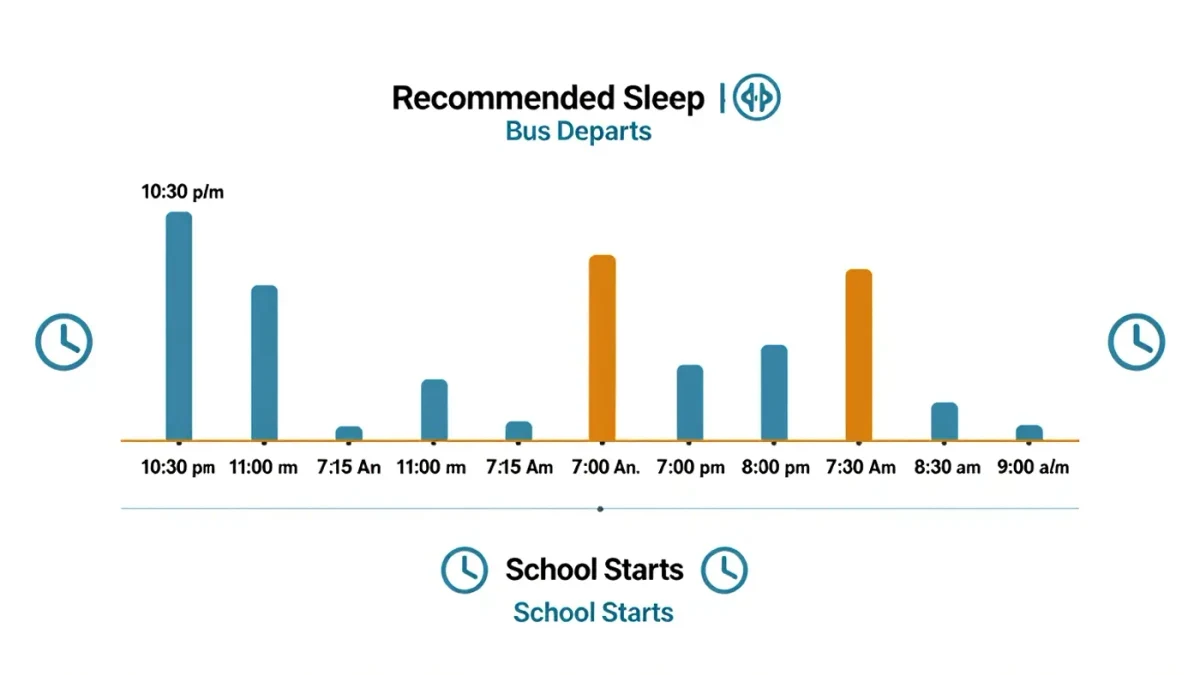
The mismatch is structural: a teen who can't fall asleep before 11 p.m. and wakes at 6 a.m. for a 7:15 bus is running on seven hours or less, every day, for years. Weekend catch-up sleep — sleeping until noon — partially repays the debt but also pushes the body clock later, which makes Sunday night harder. That loop is familiar to most families with a high schooler.
What did the data show about school start times?
The CDC's analysis of national school health data found that roughly nine in ten U.S. high schools started before 8:30 a.m., the threshold the American Academy of Pediatrics recommended in 2014 for middle and high schools. Districts that moved starts later — Seattle being one well-studied example — saw students gain meaningful sleep time, with research reporting roughly half an hour more per night after Seattle shifted its high school start to 8:45 a.m. in 2016.
That number sounds modest, but applied nightly across a school year it compounds, and studies of later-start districts have generally found improvements in attendance and grades alongside the sleep gains.
What have states actually changed?
California passed the first statewide law in 2019, taking effect in July 2022: public middle schools can't start before 8 a.m., and high schools not before 8:30 a.m. Florida followed in 2023 with a law phasing in later start requirements for middle and high schools by July 2026. Other states have studied the idea without mandating it, leaving most decisions to districts.
The holdups are practical, not scientific: bus schedules layered across three school tiers, parent work schedules, athletics, and after-school jobs. Districts that switched successfully usually rebuilt transportation from scratch rather than shifting one school in isolation — which is also why changes often take two years of planning.
Does more sleep actually change school outcomes?
The evidence leans yes, with the honest caveat that studies vary in size and design. Researchers studying later starts have reported better attendance, slightly higher grades, and in some studies fewer teen car crashes in the morning commute window — a finding that carries particular weight with policymakers. Sleep researchers also link chronic short sleep in teens to higher rates of depressed mood and irritability, which is one reason the AAP treats sleep as a health issue, not a discipline issue.
What the research doesn't show is that later starts alone fix everything. A teen who sleeps nine hours but scrolls until 2 a.m. on weekends, or who carries an overloaded schedule, still has a sleep problem shaped by choices and constraints, not just the first bell.
What can a family do while waiting for a later bell?
Plenty, within the biology. The levers that matter most, in rough order of impact:
- Anchor the wake time. A consistent wake-up — including a weekend drift of no more than an hour or two — does more than any bedtime lecture, because morning light sets the body clock.
- Morning daylight. Ten to twenty minutes of outdoor light shortly after waking helps pull the clock earlier; a dark bedroom and bright morning are opposites for a delayed rhythm.
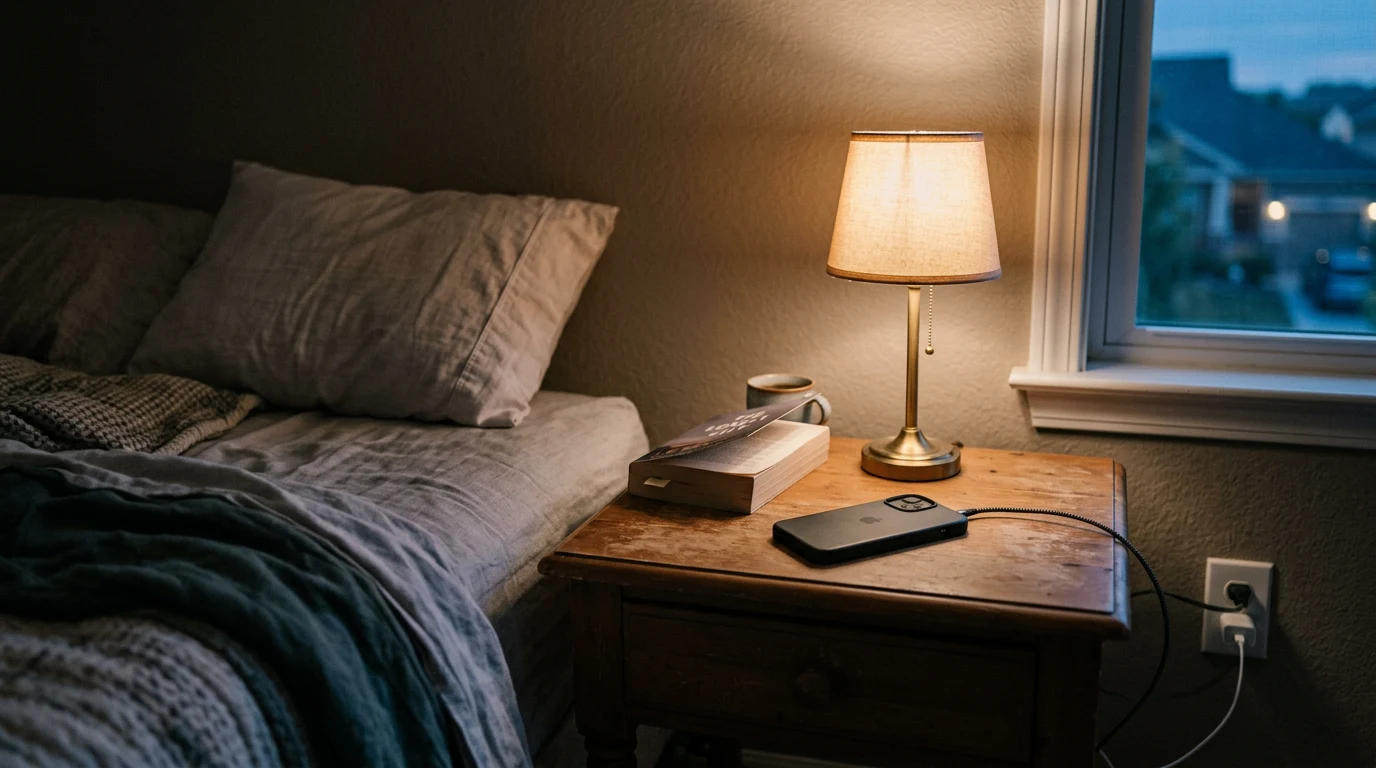
- Move screens out of the last hour. The stimulation matters at least as much as the light. Phones charging outside the bedroom remains the single most effective household rule families actually sustain.
- Watch the caffeine cutoff. Afternoon energy drinks and coffee push an already-late clock later; a 2 p.m. cutoff is a common pediatric recommendation.
- Ask the school what exists. Some districts offer later first periods, zero-hour alternatives, or schedule changes that ease a brutal commute — worth a counselor conversation before assuming nothing can move.
When should sleep become a doctor conversation?
If a teen is getting adequate opportunity for sleep — dark room, no screens, consistent schedule — and still can't function in the morning, or if loud snoring, long daytime sleepiness, or low mood persist, that's a pediatrician visit rather than a discipline problem. Insomnia and sleep disorders in adolescents are treatable, and cognitive behavioral therapy for insomnia is the recommended first-line approach for teens with chronic difficulty falling asleep.
What about naps, energy drinks, and catch-up sleep?
Naps are a tool with a setting. A twenty-to-thirty-minute nap after school, before dinner, can take the edge off a sleep-deprived afternoon without wrecking the night; a two-hour nap at 6 p.m. is a second sleep episode that pushes bedtime past midnight. Teens who nap should keep it short, early, and consistent, and treat it as a bridge rather than a substitute.
Energy drinks deserve a harder line than they usually get in households. The caffeine doses in popular cans run well above a cup of coffee, and adolescents — with lower body weights and developing cardiovascular systems — metabolize it differently. Pediatric bodies, including the American Academy of Pediatrics, have cautioned against energy drinks for adolescents outright; the practical family rule of "coffee before noon, never energy drinks" is easier to enforce than a blanket caffeine ban that gets ignored.
Weekend catch-up sleep is the most misunderstood piece. Sleeping until noon on Saturday repays some weekday debt, but it also shifts the body clock the same way jet lag does — which is why Sunday insomnia and brutal Monday mornings travel together. The compromise sleep researchers generally suggest: keep the weekend wake-up within about two hours of the weekday time, and if the debt feels crushing, that's information about the weekday schedule, not a prescription for weekend hibernation. A teen needing twelve hours every weekend is telling you something about the five nights before it.
The short version
Teens are wired later and scheduled earlier; the research on later school starts is solid and growing, with California's law in force since 2022 and Florida's taking effect in 2026. Until local bells move, families get the most from a fixed wake time, morning light, and phones out of the bedroom — and from treating exhausted teens as under-slept rather than unmotivated.