Preparing for life after graduation works best as a spring-long process rather than a May decision, and the paths are more varied than the folklore: per the National Center for Education Statistics, about 62 percent of recent U.S. high school completers enrolled in college shortly after graduating — meaning nearly four in ten took a different route, into work, training, service, or a gap year. Whichever lane a senior is in, the same five categories decide how smooth the landing is: money mechanics, documents, adult-life systems, relationships, and a realistic calendar. This guide walks each one.
As always, this is information rather than advice — students, states, and schools differ, and deadlines below are categories to verify, not dates to trust blindly.
What should seniors do in each season?
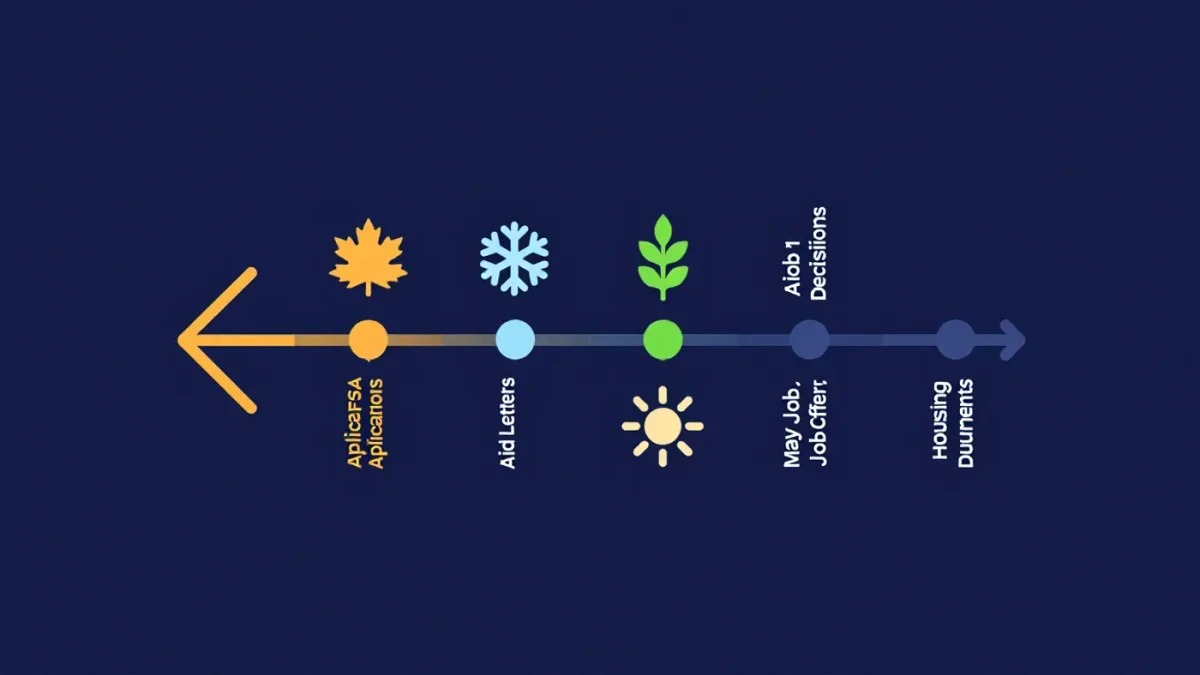
The year has a natural rhythm families can anchor to.
- Fall (senior year): applications for college-bound students; FAFSA (the federal aid form) opens in the fall; students heading to work or training should be lining up spring and summer options now too.
- Winter: financial aid letters and acceptance decisions arrive for early applicants; everyone else should be comparing offers or confirming a work-training plan in writing.
- Spring: decisions crystallize — college commitment deadlines typically land May 1; job-bound seniors should be applying, since many employers run summer hiring waves; gap-year plans need structure now, not in August.
- Summer: the logistics window — housing, orientation, registration deadlines, certifications, and the adulting checklist below.
What money systems does a graduate need?
Four, and they're buildable in a weekend each. A bank account the student controls, with mobile deposit and no monthly fees. A budget — even a crude three-line one for fixed costs, food, and fun — because the first months of independent money are when habits set. A credit start: many banks offer secured or student cards, and a thin, careful credit history started at eighteen pays off for a decade. And a filing habit: a first tax return (usually simple for part-time wages) is worth doing with a parent once, on paper, slowly.
For college-bound students, add the aid calendar: FAFSA renewal happens every year, not once, and scholarship searches realistically continue through the undergraduate years. NCES data consistently show that unmet need and clear information gaps push students out of college more than grades do — knowing deadlines is a financial skill.
What documents and logistics should be handled before leaving home?
The unglamorous list that prevents real emergencies:
- Identification: a state ID or driver's license, an original or copy of the birth certificate, and a Social Security card — needed for jobs, housing, and aid.
- Health care access: insurance card, a list of current medications and allergies, and clarity on where to seek care in the new location. Students 18 and older should understand that parents no longer automatically access their health records.
- Medical and legal authorizations: families often add a health-care proxy or power of attorney once a student turns 18 — a quiet, standard step that turns a crisis into paperwork instead of a wall.
- The practical file: login credentials managed safely, key contacts written down on actual paper, and copies of everything stored in the cloud.
What about students not going straight to college?
They need a plan with the same rigor, and the strong ones have three features: training with a credential (apprenticeships, community college certificates, employer programs — many trades pay while training), a written goal with dates, and an adult who checks in monthly. The Bureau of Labor Statistics' occupational data shows solid demand and pay in skilled fields that don't require four-year degrees, and military service and programs like AmeriCorps remain structured options with education benefits attached.
The one version to avoid is the drift year with no structure — not because gap time is bad, but because unstructured time without a reset date tends to extend. A gap year with a job, a saved amount, and a start date for what's next is a plan; a gap year with none of those is a pause that may not restart on its own.
What life skills actually matter most in the first year out?
The ones that fail loudly when missing: laundry and basic cooking (freshman weight gain and pizza budgets trace back to both), waking up without being woken (the single biggest predictor of failed morning classes and missed shifts), appointment-keeping (doctors, advisors, mechanics), and asking for help early — from a boss, an advisor, a resident assistant, or a doctor. That last skill separates students who recover from a bad first semester from those who don't.
How should parents shift their role?
From manager to consultant. The contract that works for most families: the graduate owns decisions and executes tasks; the parent gives advice when asked, money as agreed, and unconditional availability in a crisis. A scheduled weekly check-in — Sunday call, family group chat — keeps connection without surveillance. And parents of college-bound students should meet the FERPA reality: once students enroll in college, parents don't access grades or records without the student's say-so, so the monitoring habit has to become a trust habit.
What should the last summer at home actually include?
Besides earning and resting: the document checklist, the money systems, one honest family conversation about expectations (money, visits, communication, house rules if the graduate stays home), and something sentimental on purpose — a trip, a dinner, a photo book. The transition works best when the logistics are done early enough that the last weeks are a goodbye rather than a scramble.
The short list
Six in ten graduates head to college right away; the rest build equally valid paths that need equal planning. Whichever it is, the senior year spring is for decisions in writing, and the summer is for documents, money systems, and life skills — done with the family, not for the graduate. Per NCES enrollment data and decades of transition research, the students who land well are the ones who arrive with systems already running.