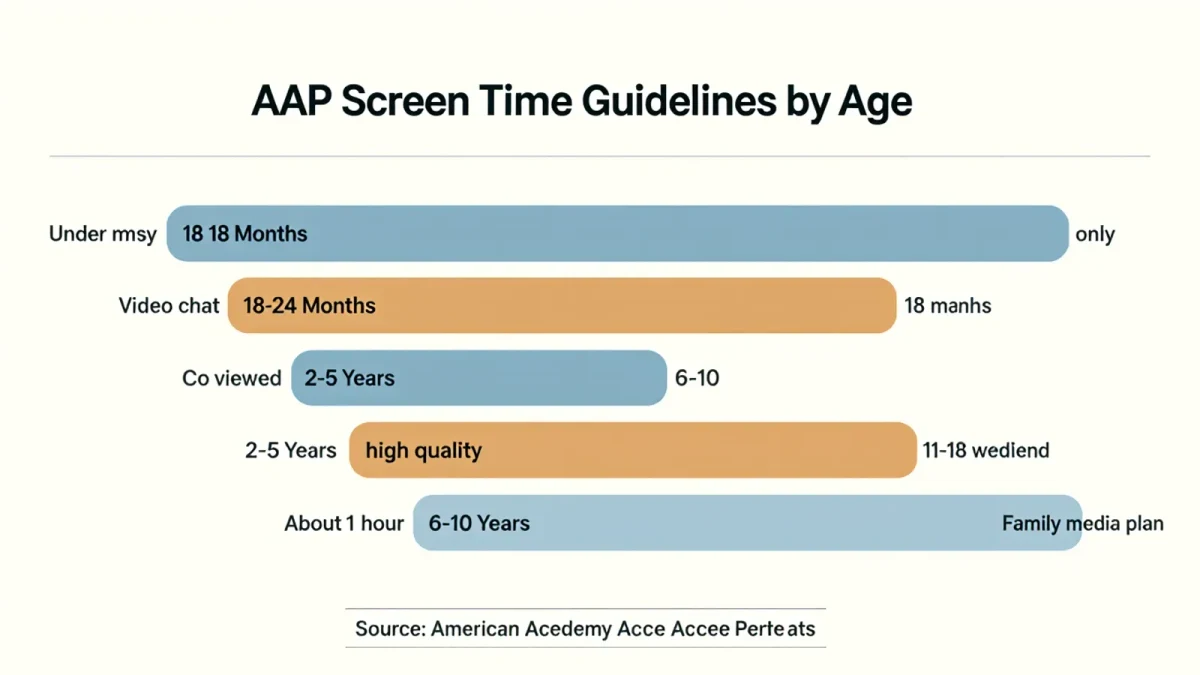
Screen time rules work when they protect three specific things — sleep, meals, and attention — rather than chasing a total daily number. The American Academy of Pediatrics' 2016 guidance set its firmest limits for the youngest children: avoid screens under about 18 months except video chatting, and cap high-quality programming at about one hour a day for ages 2 to 5. For school-age children and teens, the AAP shifted away from a universal hour cap toward a family media plan with consistent limits on timing and content — a position it has maintained since (American Academy of Pediatrics, 2016).
This guide publishes information, not medical advice — children differ, and your pediatrician belongs in decisions about sleep, attention, or mood. What follows is what the rules that actually survive in real households tend to have in common.
Why did the advice move away from one big number?
Because an hour is not an hour. Sixty minutes of a drawing app with a grandparent on video is a different activity from sixty minutes of autoplaying video at 9:40 p.m. Research summarized in the AAP's guidance and in later reviews keeps landing on the same moderators: what is being watched or played, whether an adult is co-engaged, and above all when it happens. A countdown timer treats all of those as equal, so families abandon it, then feel bad, then abandon rule-making altogether.
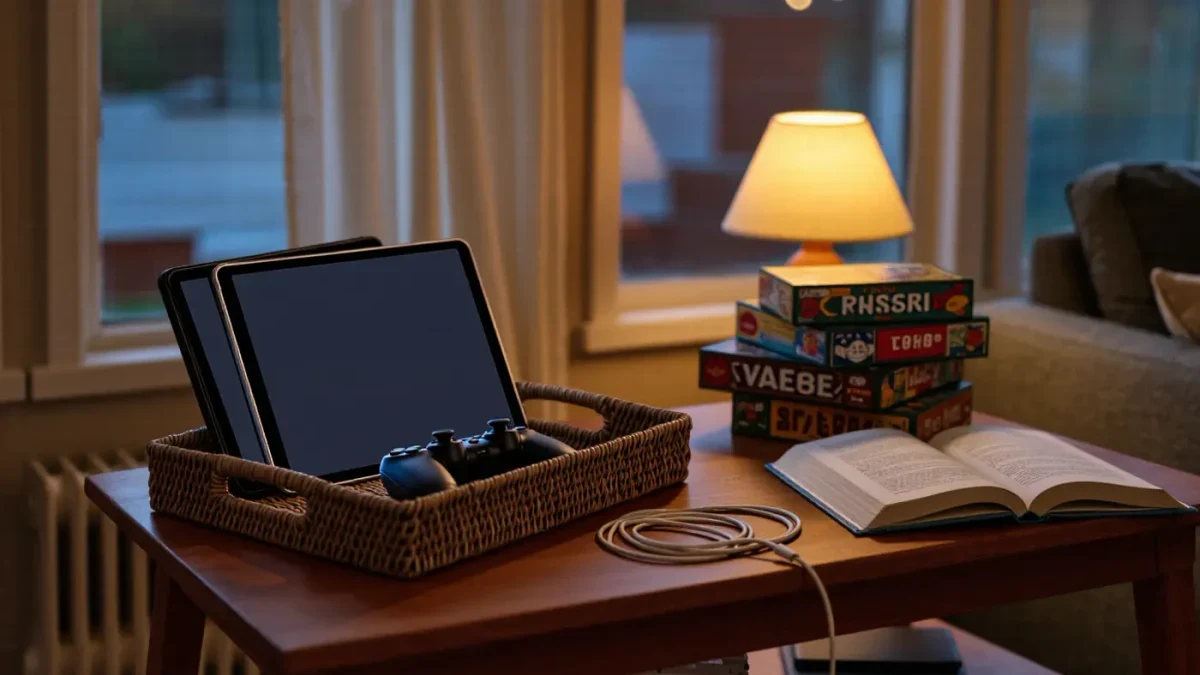
Rules attached to structure rather than minutes — screens live in the living room, not bedrooms; off during dinner; parked an hour before bed — are enforceable because you can see them being followed.
What are the rules worth actually keeping?
A short list you will still be using in March beats a comprehensive one that dies in October. The four below carry the most evidence weight.
- Sleep guardrail: screens out of bedrooms overnight and powered down in the hour before bed — the AAP and CDC both tie device timing to sleep hygiene (CDC sleep guidance, 2024).
- Meal rule: no screens at family meals, adults included, because co-viewing and co-eating are where the conversation benefit lives.
- Homework partition: entertainment screens off during homework; school-required devices used in a shared space.
- Content gate: you know what the apps are, you can see the settings, and passwords for downloads and in-app purchases belong to the adults.
How do I make a rule my teenager will half-keep?
Write it together. Teens comply better with limits they helped set, and the negotiation itself teaches the skill you actually want: noticing what a platform is doing to your attention. Start from interests rather than prohibitions — what they love doing on a device, what they wish they did less of, what the family's own phone habits look like from their side. Expect the last one to sting.
Be honest about your own exceptions. A parent scrolling through dinner while enforcing a phone basket for the kids is running a rule on borrowed time. Modeling the behavior is not perfectionism; it is the price of the rule working.
What should happen on the device, not just around it?
Sit down next to your child while they use it at least sometimes — the AAP's guidance emphasizes co-viewing and co-play for younger children and staying interested for older ones. You learn what the platform serves next, and your child learns that talking to you about it is normal, which is the entire ballgame by the time they have accounts you cannot see.
Turn on the platform-level settings that exist precisely for families: content ratings, purchase locks, downtime windows, and activity dashboards. And rehearse the social situations before they arrive — the group chat that turns mean, the stranger who is too friendly, the photo request — the same way you rehearse other safety drills.
| Age band | Firm rule that works | Watch-for |
|---|---|---|
| Under 2 | Video chat with family only | Background TV during play |
| 2–5 | ~1 hour high-quality, co-viewed | Autoplay chains |
| 6–10 | Structure rules + content gates | Games with endless rewards |
| 11–13 | Written family media plan | First smartphone + group chats |
| 14–18 | Negotiated limits, shared norms | Bedtime device in bedroom |
What about video games specifically?
Games deserve their own line in the family media plan because their design is the most persuasive in the house: match lengths that stretch, rewards that arrive just irregularly enough, and social pressure from friends who are all online at a specific hour. The rules that hold up are structural — agreed windows rather than open sessions, homework and sleep protected first, and the console or computer living in a shared space during the week.
Play with your child sometimes, the same way you might watch a show together. You will learn what the game actually rewards, and your child gains a witness who is curious rather than only regulatory. The goal is a child who can close a game at the agreed time with ordinary grumbling — not one who never opens it at all.
Do the rules change on weekends and vacations?
They should, and saying so up front is what keeps weekday rules intact. Build a two-tier plan: the strict weekday structure that protects sleep and homework, and a looser weekend version with a stated stopping point agreed before the screens go on. Children accept different settings far better than they accept improvisation, and a written distinction beats a daily argument about what today counts as.
— or something bigger — isn't working?Normal includes plenty of grumbling at shutdown time; children test limits for a living. The signals worth acting on are sustained: sleep shrinking, meals abandoned, hobbies dropped without replacement, mood tracking with usage, or deception about devices that goes beyond ordinary boundary-pushing. Those are reasons for a reset conversation and possibly the pediatrician — not reasons to escalate punishment, which mostly drives usage underground at exactly the ages when you most want to know what is happening.
How do we reset after it all falls apart?
Pick one week, one rule, and one replacement activity — the substitution matters, because a vacuum refills itself. Say what you are doing and why, keep it warm, and expect a 10-day dip before the new normal takes hold. Then add the second rule. The families whose screen rules last are not the strictest ones; they are the ones whose rules were small enough to keep and honest enough to defend at the table, where the adults put their own phones in the basket first.