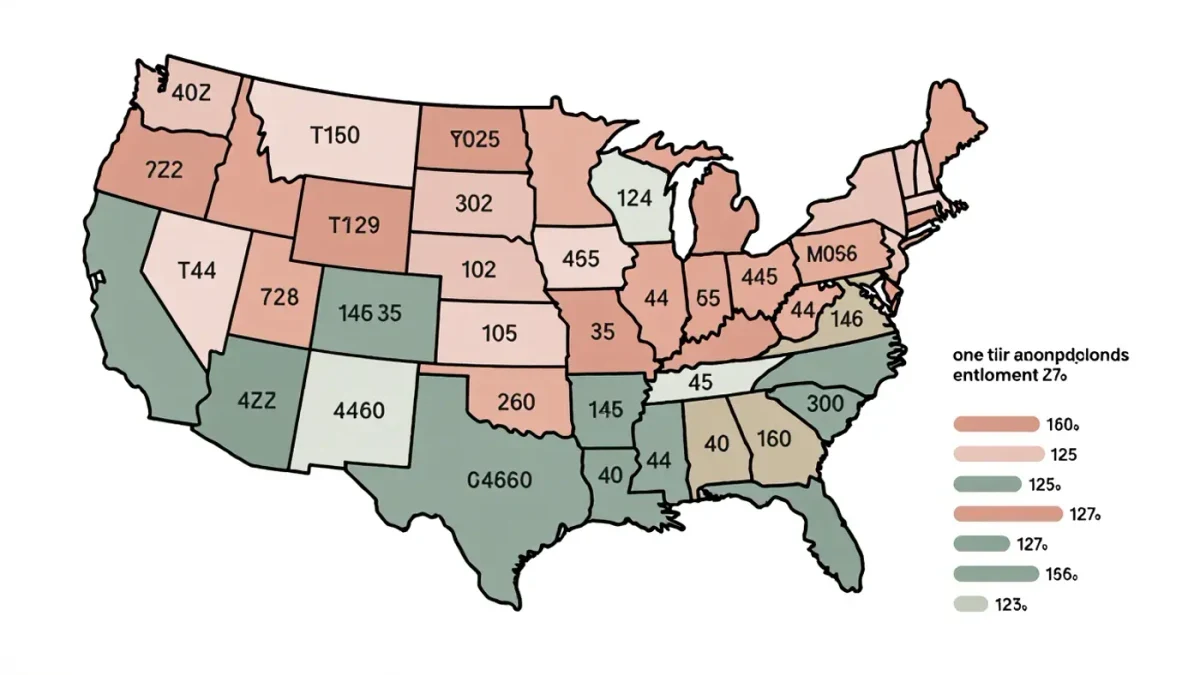
Universal pre-K is scaling unevenly across the United States: more than 40 states plus the District of Columbia now operate some public preschool program, yet those programs serve roughly a third of four-year-olds and well under a tenth of three-year-olds nationally, per the National Institute for Early Education Research's 2023 State of Preschool yearbook. "Universal" is therefore a moving target — in some states it means every four-year-old has a free seat; in others it means a program exists that a family might reach a seat in, eventually. For parents of a three- or four-year-old, the practical question is not whether pre-K is expanding but what your specific state and district guarantee, and when you have to ask.
A framing note: this is information about the policy picture, not a recommendation about your child. Developmental readiness for pre-K varies, and quality matters more than the label on the door.
What does "universal" actually mean?
In policy terms, a universal program is one open to all children of a given age in the state, regardless of family income — as opposed to targeted programs limited to families meeting income thresholds or risk factors. The oldest universal program is in Oklahoma, which since 1998 has offered pre-K to all four-year-olds and became one of the most studied programs in the country. Other states use income-targeted models that have expanded eligibility upward over the years, approaching universality in practice without declaring it. The distinction matters because income-targeted programs usually require documentation and have priority rules; true universal programs operate closer to kindergarten enrollment — show up, get a seat, subject to space.
Who is scaling up, and how fast?
The pattern through the mid-2020s is steady expansion constrained by two bottlenecks: teachers and space. Several states pushed eligibility expansions or enrollment growth in the years after the pandemic, often using one-time federal relief funds to build classrooms — a funding cliff states then had to resolve as the money expired in 2024. States with long-running universal programs (Oklahoma, Florida, which offers pre-K to all four-year-olds through a constitutional amendment passed in 2002, and others) show what scale looks like; states in the middle tiers typically expand by a few percentage points of enrollment per year, which sounds slow until you remember each point is thousands of children. The federal contribution is modest — Head Start, the long-running federal program, serves on the order of 800,000 children nationally through income eligibility, and federal preschool development grants have funded state planning rather than seats at scale.
What does the research say pre-K does?
Two honest findings sit side by side. The famous earlier studies — small, intensive programs like the Perry Preschool project of the 1960s — found large, lifelong benefits for participants, and they launched the whole movement. Modern scaled-up programs typically show smaller effects: gains in kindergarten readiness that are real and largest for children from lower-income families, then often fade on test scores in early elementary grades. Researchers debate what the fade means — some analyses find longer-run benefits to health and earnings even where test scores converge, suggesting the tests measure less than life does. The defensible summary for parents: good pre-K reliably helps children arrive at kindergarten more prepared, with the largest gains for children whose families have the fewest resources, and it is not a academic force-multiplier for children who already attend rich preschool environments.
Why is quality so uneven?
Because preschool is cheap to do badly. The yearbook assessments have long found that few state programs meet all of their research-based quality benchmarks — things like lead teachers with a bachelor's and specialized training, assistant teachers with credentials, class sizes of 20 or fewer, and staff-child ratios around 1:10. Meeting those standards requires paying educators enough to retain them, and that is exactly the bottleneck: preschool teachers with the required credentials can often earn more teaching kindergarten, so programs hire, train, and lose. The states scaling fastest with quality intact tend to be the ones that funded teacher pay alongside seats.
What should parents of a three- or four-year-old actually do?
Four moves, in order. Learn your state's model — the state education agency's preschool page states who is eligible and how to apply, and the National Center for Education Statistics publishes the enrollment data that show how your state compares. Ask about the deadline: even universal programs have application windows in winter and spring before the school year, and late applicants get waitlists. Visit and apply the quality tests — teacher credentials, class size, ratio — rather than the brand. And if a public seat is not available or the program is half-day only, ask what supplements it: many districts partner with community providers, and Head Start eligibility runs alongside state programs for families who qualify.
What about programs for three-year-olds?
Three-year-olds are where universal pre-K remains mostly aspirational. Because state-funded programs serve well under a tenth of three-year-olds nationally, per the NIEER yearbook data, families of threes mostly choose among private preschools, family childcare homes, Head Start if income-eligible, and staying home — a patchwork where cost, not development, often decides. A few states and cities have built seats for threes deliberately, and the mixed delivery systems in most states lean on community providers rather than school buildings for this age. The research case for two years of preschool over one is positive but modest, and it is heavily dependent on quality — a weak second year adds little. For a family weighing a paid second year of preschool against other uses of the money, the honest framing is that a strong program is worth it if it fits the budget without strain, and a warm, language-rich home year with regular play and reading is a legitimate alternative, not a deficit. The scarce resource at three is conversation and play, and not all of it is for sale.
What comes next?
Watch your state legislature rather than Washington. Universal pre-K in the United States is a state story, and the direction of travel — more states moving toward universal four-year-old access, with quality standards trailing quantity — has held across administrations of both parties at the state level. The practical timeline for your family is shorter than the policy one: the winter before your child turns four is when the doors open, and the parents who knock early are the ones who get seats.